



Playtime with Inclusive Play Consultant Amber: spoiler alert, screens are not the enemy
Playtime with Inclusive Play Consultant Amber: spoiler alert, screens are not the enemy

Child’s play is actually serious business. But there’s no need to stress! We talked with the UK’s inaugural NSPCC Champion of Childhood and internationally recognised Inclusive Play Consultant Amber Ogunsanya-William about all of it. Why it’s important, what type of play is appropriate at which age and of course, the question on every parent’s mind these days: Should I keep my child away from screens? Dive into the toy box with us and learn everything there is to know about play from an expert.
Close your eyes for a second and picture it: a play space filled with rope swings, dens, community, creativity and the belief that every child deserves a space where they can belong. That’s how Amber grew up, with a father who managed an adventure playground: a radical, joyful world of play that shaped her childhood and ignited her future passion. As an Inclusive Play Consultant, she now works across education, culture and community to champion play as a driver of equity, wellbeing and transformation. But first thing’s first: what is an Inclusive Play Consultant?

The language of childhood
“I work with families, educators, nurseries, schools and cultural organisations to create spaces where every child feels seen, valued and able to thrive through play,” explains Amber. Sounds amazing so far, doesn’t it? “My work blends child development, creativity, social justice and joy. I help adults understand how to design play environments that are flexible, responsive and truly inclusive so that no child is left on the sidelines.”
Amber, who has collaborated with leading organisations including the London Business School and the Royal Opera House, holds a deep belief that play is not an add-on, but a vital pathway to resilience, joy and lifelong learning. “Play is not a luxury,” she shares. “It is not something children earn after learning. Play is the language of childhood, the way children make sense of the world, test ideas, process emotions, build relationships and discover who they are.”
Protecting play
We weren’t kidding when we said child’s play is actually a serious topic - one that needs protecting. According to Amber, “When we protect play, we protect childhood itself. And when adults join children in play, even for a moment, something magical happens. Connection deepens. Stress softens. Understanding grows. Play becomes a bridge between worlds, allowing us to meet children exactly where they are.”
The first classroom
We love the idea of building bridges, right? Amber explains how growing up on adventure playgrounds shaped her career path. “That playground was not just a place to play. It was my first classroom, my first community and the foundation of my belief that play is a human right. I saw firsthand how play transforms children’s confidence, friendships, resilience and sense of self”, Amber continues. “It changed my life, and I have spent my career making sure other children have access to that same magic.”
Three everyday play moments
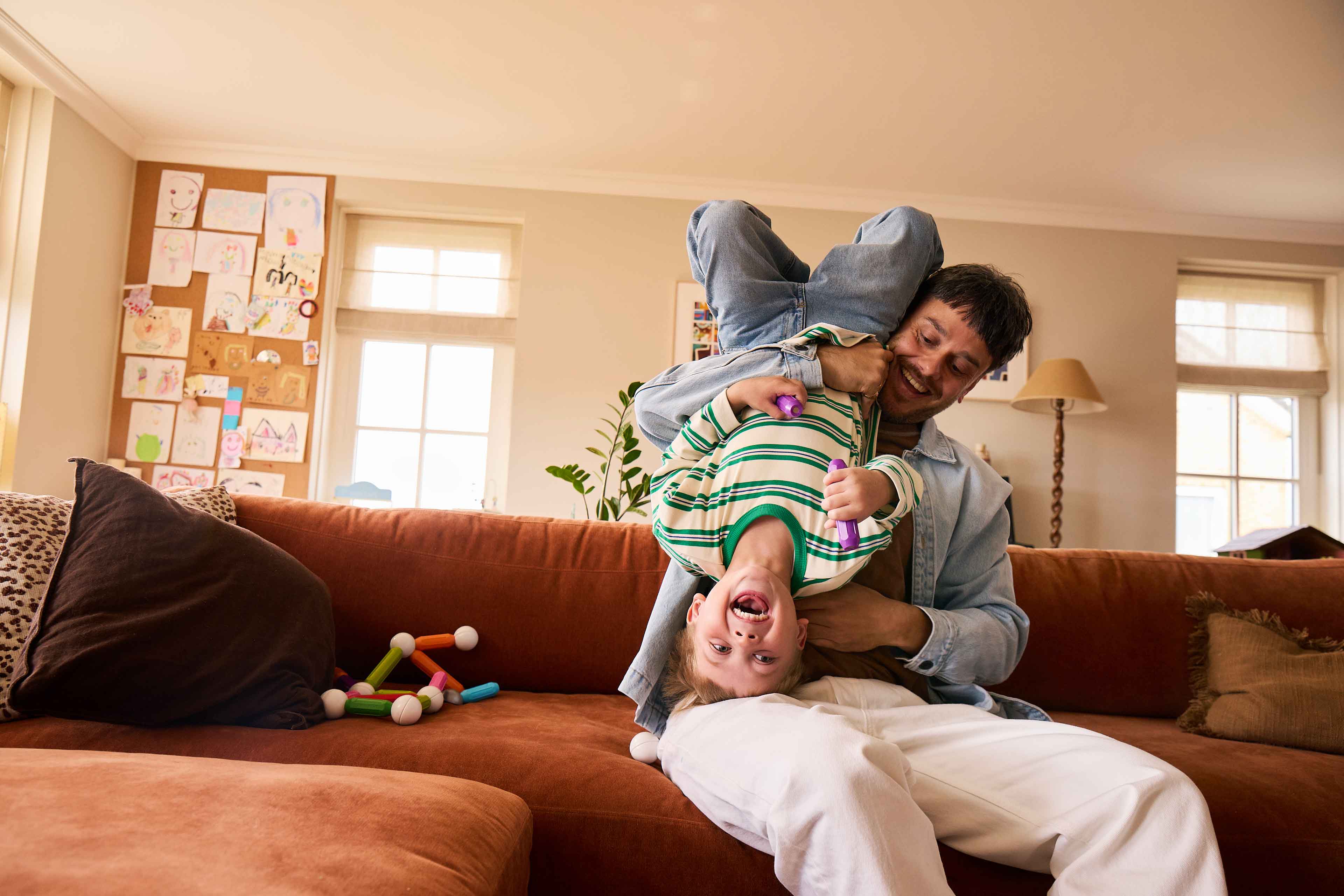
Now that we know just how important play is, how do we incorporate it into our daily lives? Because let’s be honest: we’re exhausted. We crave quality time with our children and yet our schedules are overstuffed. Amber has a great solution. “Parents are carrying so much emotionally, mentally and physically. Play should never feel like another task on the to-do list. It can be woven into the smallest, most ordinary moments of the day.”
Here are three such moments you can enjoy with your little angel.

The Getting Ready Wiggle
While putting on shoes or coats, add a silly sound, a wiggle or a dramatic freeze moment. It transforms a stressful transition into a shared giggle.
The Kitchen Countdown
While waiting for the kettle to boil, try a 20-second game. Copy my face. Find something soft. Tap three things that make different sounds. These tiny bursts of play build connection without adding pressure.
The Story of the Day
At bedtime, narrate their day like a gentle story. Once upon a time, a brave little explorer discovered the biggest puddle in the land. Children adore hearing themselves reflected back with warmth and wonder.
We can’t wait to try these! Amber emphasises the simplicity, finishing off by saying, “These micro moments do not require props, planning or perfection. Just presence.”
Understanding your child (and yourself!) through play
“Play is a window into your child’s inner world. When you watch your child play, what they repeat, what they avoid, what they invent, you are witnessing their thoughts, emotions and problem solving strategies in motion,” according to Amber. “Play reveals what they are curious about, what they are processing, what they are proud of, what they are worried about and how they see themselves in the world.”
Can you learn something about yourself through play? Absolutely. Amber elaborates, “Play helps adults understand themselves too. When you join your child in play, you notice your own patterns. Do you rush? Do you try to direct everything? Do you find it hard to switch off? Play invites adults to slow down, breathe and reconnect with their own sense of wonder. It becomes a mirror and a bridge, a way to meet your child and yourself with more compassion.”
How much screen time is okay?
And now for the most pressing question we can think of about the state of children’s play: is technology okay for my child? Amber has some clear advice on this controversial topic.
“Technology is not the enemy,” she states. “It is all about balance, intention and connection. Screens can get in the way of play if they replace human interaction or become the default activity. But they can also enhance play when used thoughtfully.”
Colour us intrigued! What does that look like? “For example, taking photos together and turning them into a story”, offers Amber. “Using a short video as a springboard for imaginative play. Exploring music, movement or drawing apps as creative tools.”
That makes a lot of sense to us. It’s not “go play on the iPad in the other room”, it’s using technology in a mindful way, as inspiration rather than its own solitary activity. Amber summarises, “The key is simple. Technology should be a tool, not a substitute for connection. If screens are used with your child rather than instead of you, they can be part of a healthy, joyful play routine.”
Types of play at certain ages
Phew, what a relief! But we saved the best for last. We asked Amber about the different stages of age-appropriate play, and she provided this warm, parent-friendly guide.
Newborns
Gentle sensory play
Faces, voices, soft singing
High contrast visuals
Skin to skin and slow movement
Babies
Tummy time adventures
Cause and effect toys
Peekaboo and mirror play
Safe household objects
Preschoolers
Role play and storytelling
Construction and small world play
Early mark making and creative arts
Cooperative games
Toddles
Messy play with water, sand or dough
Simple pretend play
Stacking, posting, filling and emptying
Movement play like climbing, rolling or dancing.
Five and up
More complex imaginative play
Board games and problem solving
Creative projects
Outdoor adventures and physical play
Fabulous! We don’t know about you, but we’re ready for playtime. But before we go, Amber has one last piece of advice. “Follow the child,” she says. “Their curiosity will always show you what they are ready for!”


